



If you do not see a green border, click here insights.clinicalinnovations.com/October 2002.htm
.
Clinical Innovations - Innovative Insights by email

IUPC INSERTION AFTER ARTIFICIAL

 RUPTURE OF MEMBRANES

Many clinicians are aware of the risks of placement outside the amniotic membranes (extra-ovular placement).  Hence, clinicians often ask if certain circumstances can predispose to or prevent extra-ovular placement.

Intrauterine pressure monitoring requires rupture of the amniotic membranes before placement of the catheter.  Caution must be taken in any situation when these membranes are not ruptured fully.  Incomplete rupture of the membranes can occur with spontaneous or artificial rupture of membranes.  


 It is common with spontaneous rupture of membranes to observe intermittent positive signs of rupture such as the “fern sign”.  Most clinicians attribute inconsistent signs of rupture of membranes to a “high leak”.  In other words, the fetus, through descent or other fetal movements, effectively closes off that incomplete rupture (leak).  Artificial rupture of membranes using a spiral electrode may also produce a relatively small puncture in the membranes.  If membranes are partially ruptured or only punctured, intrauterine pressure catheters can easily be advanced outside the membranes with associated risks of amnioinfusion outside the membranes, inaccurate uterine contraction waveform, and even placental disruption.  When there is question of the size of the tear in the membranes, clinicians should attempt to increase the size of the rupture at the cervical opening.  This is accomplished by digitally rubbing against the membranes.  If a spiral electrode is present, the electrode can be used as a central point to pull the membranes against taking care to not dislodge the electrode or enlarge the fetal scalp puncture created by the spiral electrode.

Artificial rupture of membranes


Intra-amniotic placement of the Koala IUPC is assessed clinically through visualization of amniotic fluid flashback within the outer clear lumen.(Lind reference)  Other catheters are opaque.  The clinician cannot assess flashback with an opaque catheter.

Intra-amniotic placement of the Koala IUPC is assessed clinically through visualization of amniotic fluid flashback within the outer clear lumen.(Lind reference)  Other catheters are opaque.  The clinician cannot assess flashback with an opaque catheter.
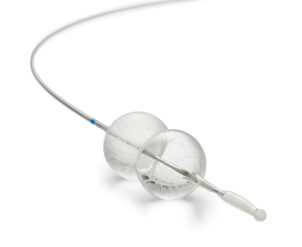
The Koala® Intrauterine Pressure System is equipped with features that help to ensure proper placement in the amniotic sac.  The Koala is the only IUPC on the market that has a clear lumen.  This makes it possible for the clinician inserting the catheter to see the amniotic fluid flashback inside the catheter.  If no fluid is seen, then catheter placement is unknown.  Or if blood is seen, it is an indication that the catheter is improperly placed, and can be removed and redirected to a more appropriate position.  


The Koala® Intrauterine Pressure System is equipped with features that help to ensure proper placement in the amniotic sac.

This Month's Winners
Winners chosen at random from all names enrolled in Insights program.
This month's winners receive the Essentials Of Fetal Monitoring by Michelle Murry.
Helen Banister, Collegeville, PA
Mollyn Bohnen, Klamath Falls, OR
Cathy Emeis, Colorado Spring, CO
Prize: Essentials Of Fetal Monitoring by Michelle Murry

Add a Subscriber
If you have a friend or colleague practicing in the OB/GYN specialty and think they may appreciate this information, send their information to: insights@clinicalinnovations.com
Cancel Subscription
To cancel your subscription and stop receiving e-mails, simply reply to this e-mail with cancel in the subject.
Clinical Innovations - the best in quality obstetrical products!

Innovative Insights Archive

.
we make it...informative